
The distinction between engagement and wedding rings must first be understood. Although the names are frequently used interchangeably, each ring denotes an entirely different object. A wedding ring is typically presented when a proposal is made, and an engagement ring is given at the time.
As an added note, the two products are not identical in any way, shape, or form, and even have significant price, positioning, and style variations. An engagement ring, which usually features a "centre stone," is more expensive than a wedding band, which is normally fashioned of a plain band or a large collection of smaller gemstones all the way around.
Both the engagement and wedding rings are traditionally worn on the left ring finger. For westerners, this is the correct way to wear a wedding ring. Traditions like this date back to the time when it was believed that the left ring finger was home to the direct vein to the heart. Which fingers each ring is worn on is entirely up to you. However, most people have grown to identify a ring on the left ring finger with engagement or marriage.
Looking for affordable wedding venues in Los Angeles? Check venues for your wedding at Breezit platform.
Ring Etiquette at the Wedding and Reception
One of the "most important" pieces of jewellery for a married couple is the wedding band. Here, the wedding band would be worn somewhere under the engagement ring on the left hand's ring finger.
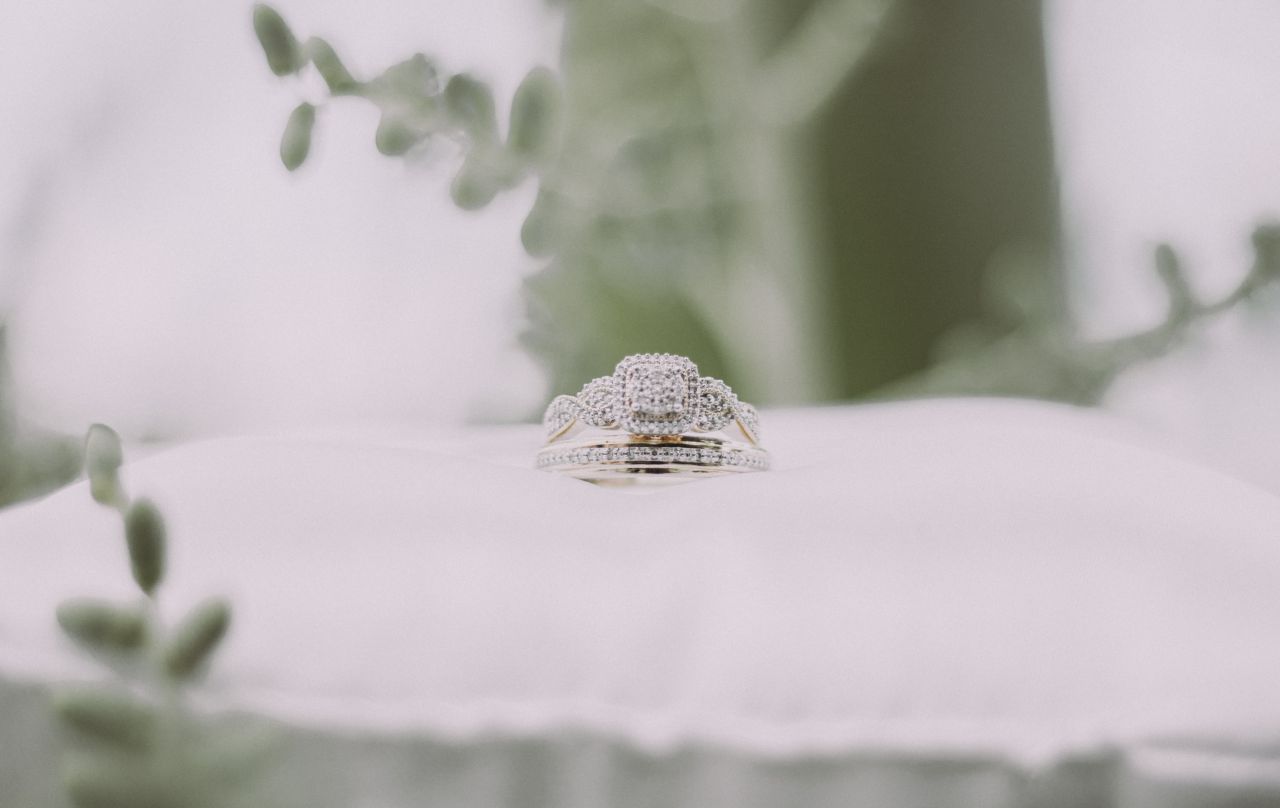
When it came time to put on their wedding bands, many brides flipped their engagement rings to their right hands before the big day. The bride's ring location may change after the wedding.
Some brides choose to have their engagements and weddings bands welded together after the wedding for a more unified appearance. This not only makes the wedding set more manageable, but also makes the addition of anniversary rings a seamless extension of the original design.
When a woman's employment requires constant use of her hands, she may opt to wear her wedding ring. This means that they reserve wearing their engagement ring for really momentous events. This is a widespread practice for those worried about losing or breaking their pricey engagement jewellery while travelling or in other scenarios. No one can tell you how to wear your rings but you. Looking for a wedding accommodation for your special day? Check Brighton Savoy Accommodation Melbourne.
Anniversary Rings
Traditional gifts for milestone anniversaries include diamonds or sapphire eternity bands on the fifth, tenth, fifteenth, and twenty-first years of marriage. We always advise couples to wear their marriage and engagement bands with a different metal than their anniversary ring because of the rings' versatility.
There has also been a rise in the popularity of anniversary rings set with coloured gemstones, which can represent the wearer's or their children's birthstones or perhaps just a favourite colour. There are no "set in stone" regulations regarding the donning of an anniversary ring. Although many women choose to continue wearing their wedding band in addition to their anniversary ring, others prefer a simpler look and choose to remove their wedding ring with their anniversary ring.
It is important that the jewellery you wear on your wedding day symbolises your commitment to your spouse. A "bad" answer does not exist. If you have any questions about the bridal, proposal, and anniversary rings we carry, please feel free to ask a member of our staff. We encourage you to contact us by email with any inquiries or feedback you may have.
The norms around engagement rings and wedding bands might be perplexing to those who aren't privy to them.
There is no one "correct" way to wear a wedding band, so make sure to think about how it will look and feel on your finger. We've included some common customs for when and how to wear wedding bands and engagement rings to help new couples plan their special day.
The Basics: Engagement And Wedding Rings 101
Engagement Ring Vs. Wedding Ring
Each ring represents a unique achievement, despite the fact that the names are sometimes used interchangeably. Although there are visual, symbolic, and financial distinctions between engagement and wedding rings, the two are exchanged on distinct occasions.
Traditional occasions for the presentation of jewellery symbolising one's commitment to another in marriage include the proposal and the exchange of engagement and wedding rings, respectively.
It is traditional for newlyweds to purchase wedding ring sets so that they may both wear a beautiful symbol of their union. More and more people, however, are choosing to shop for their wedding bands apart from their partners.
In Western cultures, engagement and wedding bands are traditionally worn on the ring (or third) finger of the left hand. The ancient Romans started doing this because they thought a vein led directly from the heart to the ring finger on the left hand. It's up to you, but most people take a ring on the left finger as a symbol of commitment, whether it's an engagement or a wedding.
How To Wear Rings During And After The Wedding Ceremony
The wedding band is traditionally worn "closest to the heart," meaning it is worn below the engagement ring on the left finger. Before walking down the aisle, many brides may swap their engagement ring for their other hand so the wedding band can be placed on the left hand. The bride will switch her engagement ring for her wedding ring during or after the ceremony. After the ceremony, some couples opt to have their engagement and wedding rings welded together to create a single, cohesive bridal set often symbolically framed by a beautiful Wedding Arch.
If a woman works in a field that requires constant use of her hands, she may find it more convenient to wear her wedding band on a daily basis and reserve her engagement ring for more formal occasions. This is a usual practice while going on a trip or if there is a risk of losing or damaging a valuable item like a diamond ring. If you don't want to show off your rings, that's fine, too!
Can Men Wear Engagement Rings?
Without a doubt! Men rarely get engagement rings in western cultures, but it happens sometimes. When Ed Sheeran was engaged to his now-wife, he wore a silver band on his left ring finger. When questioned further, he remarked, They never saw why males didn't wear engagement rings. A commitment in either direction is equivalent.
Skylar Astin, Michael Bublé, and professional wrestler David Otunga are just a few more celebrities who have publicly displayed their plans to get married by wearing engagement rings.
What About Anniversary Rings?
Diamond eternity bands or other types of rings are common presents for significant anniversaries like the fifth, tenth, fifteenth, and twentieth. Couples might mix and match their wedding and engagement rings with their anniversary bands to create a one-of-a-kind aesthetic.
Often, anniversary rings will feature a coloured gemstone accent based on the wearer's birthstone, the birthstones of their children, or the wearer's prefered colour. The convention of wearing anniversary rings on a specific finger is not universally accepted. Adding an anniversary ring to your wedding and engagement bands is common. Some couples even choose to forego the wedding ring in favour of the anniversary ring if it is a better aesthetic fit.
FAQs About Wedding Ring
Is There A Right Way To Wear Your Wedding And Engagement Rings?
Rings On The Left Hand
The most typical way to wear a wedding band is on the left hand because ancient Egyptians thought there was a vein running straight from the ring finger to the heart. If you wear your wedding band on the inside, it will be physically close to your heart at all times. Some cultures, including the United States, France, the United Kingdom, Canada, Mexico, South Africa, and many Asian countries, have worn rings on the left hand.
Rings on the Right Hand
How you present your wedding band can be influenced by local traditions or the society to which you've been exposed. Russia, Poland, and Denmark are just a few examples of countries in Northern and Eastern Europe that have adopted the Western custom of putting wedding bands on the right hand. Major markets include India, Greece, Spain, and Portugal. And in certain nations, like Brazil's, the bride and groom wear their wedding bands on opposite hands during the wedding and then switch hands after saying their vows.
Wedding Ring First, Engagement Ring On Top
Some people choose to wear both their wedding band and their engagement ring on the same finger. The engagement ring in this case would be worn after the wedding band was already in place. It's important to know that this is the correct method to wear your proposal ring and wedding band on your special day.
If you go this route, remove your ring before the ceremony so you won't have to fumble with it or worry about losing it. Keep it in your dominant wrist or a very safe place. You can either wait a while to let your new band shine, in which case you can put your sparkler back on for the reception, or you can put it back on immediately after the ceremony.
Engagement Ring First, Wedding Ring On Top
It's also standard practise to flip them around and wear them that way. Logic dictates that you should display your bands in the order they were bestowed upon you.
The fact that both your engagements and wedding rings signify your shared commitment to one another might be meaningful. Your wedding band, worn on the outside of your finger, completes the symbolic circle of your engagement ring. In other words, you're now married after being engaged.
Engagement Ring One On Finger, Wedding Ring On The Other
This is an excellent option if your wedding band clashes with your engagement ring. Some people prefer to wear their diamond ring on the right ring finger in place of the wedding band. If you don't want to wear rings on every finger or don't have a set you like, this unconventional choice is for you.
Also, it's a great option for those who prefer not to stack their rings. Both the engagement ring and the wedding band are worn on the right hand in Germany and the Netherlands. Check out our best hotel wedding accommodation for your special day.
Alternate Rings
How and when to wear engagement and wedding rings is not strictly regulated. No one ever said you had to wear them together. The majority of engaged people hide their rings from view unless for special occasions or when they wish to present themselves more formally.
However, there are plenty of people who'd rather have an engagement ring than a wedding band. You'll have to choose.
How To Wear Wedding Rings That Don’t Fit
Over time, a wedding band might become too big or too small to be worn comfortably. Yet, even if the ring can't be resized, it might still be worn. Give these a shot:
Put the ring on your middle finger instead. On the other hand, the same digit may be larger or smaller, making room for your ring.
Wear it near to your heart on a matching chain as a pendant. Upgrade your jewellery with diamonds or gemstones by setting them in a new ring, necklace, or earring.
Wearing A Wedding And Engagement Ring
If a bride wears her engagement ring and wedding band together, the band goes on first. Some rings, such as engagement rings sold as part of a bridal set, are meant to be worn together and look unfinished if worn alone.
The band closest to the hand may not be as important if the rings are soldered together to form a single unit, as is the case with symmetrical diamond ring wrap sets. If the rings are separate, the wedding band should be worn closer to the hand so the engagement ring may be quickly removed before engaging in hazardous activities like gardening, working out, or handling sharp objects.
When To Remove Wedding Rings
It may be preferable to forgo wearing a wedding band on some occasions. Removing a wedding band for housework, gardening, or sports protects the metal and jewels from wear and tear. Water can cause your fingers to shrink, so it's best to take any loose jewellery off before swimming in the shower.
The decision to stop wearing a wedding ring permanently may arise as a result of significant life circumstances. When a marriage ends in divorce, the ring may be given back to one partner. Taking off one's wedding band following the death of a spouse is a personal choice that should be made after an appropriate period of grief.
A Symbol Of Your Love And Commitment
Whether a couple has been married for one day or many, knowing the proper way to wear wedding rings will help them do so with dignity and pride. Simply putting on your wedding ring each morning might serve as a reminder of the unbreakable bond you and your spouse share. Examine your ring and how it sits on your hand to decide how to wear it best from when you say "I do" into the many years of life ahead.
Tips For Wearing Wedding Rings
Despite the seeming simplicity of wearing a ring, some tricks you may employ to ensure that it is displayed beautifully is safe from harm and can be removed quickly and easily if necessary.
Sizing
Pick a wedding ring size that you won't have any trouble taking off, as freeing a trapped band when there's nothing to grab onto can be a real pain. Sometimes, this may cause the wedding band to be slightly more significant than the engagement ring.
Putting the wedding ring outside a big or loose engagement ring will assist keep it in place while putting a more extensive wedding ring inside a tighter engagement ring can help keep it from falling off. Look no further, Brighton Savoy Hotel Melbourne offers wedding packages for your special day.
Customs
In deciding how to wear your wedding ring, keep regional, cultural, and religious norms in mind. It is customary in many eastern European traditions to wear a wedding band on the right hand.
Curved Rings
To maximise the brilliance of the diamond in the engagement ring, it is recommended that the wedding band be worn inside the engagement ring.
Rings With Large Stones
Place the engagement ring outside the wedding band, which should have a large diamond or another jewel. Set a secondary, lesser diamond inside to draw attention to the primary stone.
Conclusion
Both engagement and wedding rings are worn on the left hand, but which finger you choose to wear them on is entirely up to you. An engagement ring, which usually features a "centre stone," is more expensive than a wedding band. A wedding band is normally fashioned of a plain band or a large collection of smaller gemstones all the way around. The norms around engagement rings and wedding bands might be perplexing to those who aren't privy to them. There are no "set in stone" regulations regarding the donning of an anniversary ring. We've included some common customs for when and how to wear wedding bands and engagement rings to help new couples plan their special day.
The wedding band is the one that is "closest to the heart" of a married pair. It's up to you, but most people take a ring on the left finger as a symbol of commitment, whether it's an engagement or a wedding.
The wedding band is traditionally worn "closest to the heart," meaning it is worn below the engagement ring on the left finger. To answer your question, this is the proper way to wear your engagement ring and wedding band on your big day! Engagement Ring One On Finger, Wedding Ring On The Other If your wedding band does not go with your engagement ring, this is a great way to wear it.
Content Summary:
- The distinction between engagement and wedding rings must first be understood.
- Although the names are frequently used interchangeably, each ring denotes an entirely different object.
- A wedding ring is typically presented when a proposal is made, and an engagement ring is given at the time.
- As an added note, the two products are not identical in any way, shape, or form, and even have significant price, positioning, and style variations.
- An engagement ring, which usually features a "centre stone," is more expensive than a wedding band, which is normally fashioned of a plain band or a large collection of smaller gemstones all the way around.
- Both the engagement and wedding rings are traditionally worn on the left ring finger.
- For westerners, this is the correct way to wear a wedding ring.
- Traditions like this date back to the time when it was believed that the left ring finger was home to the direct vein to the heart.
- Which fingers each ring is worn on is entirely up to you.
- However, most people have grown to identify a ring on the left ring finger with engagement or marriage.
- One of the "most important" pieces of jewellery for a married couple is the wedding band.
- Here, the wedding band would be worn somewhere under the engagement ring on the left hand's ring finger.
- When it came time to put on their wedding bands, many brides flipped their engagement rings to their right hands before the big day.
- The bride's ring location may change after the wedding.
- Some brides choose to have their engagements and weddings bands welded together after the wedding for a more unified appearance.
- This not only makes the wedding set more manageable, but also makes the addition of anniversary rings a seamless extension of the original design.
- When a woman's employment requires constant use of her hands, she may opt to wear her wedding ring.
- This means that they reserve wearing their engagement ring for really momentous events.
- This is a widespread practice for those worried about losing or breaking their pricey engagement jewellery while travelling or in other scenarios.
- No one can tell you how to wear your rings but you.
- Traditional gifts for milestone anniversaries include diamonds or sapphire eternity bands on the fifth, tenth, fifteenth, and twenty-first years of marriage.
- We always advise couples to wear their marriage and engagement bands with a different metal than their anniversary ring because of the rings' versatility.
- There has also been a rise in the popularity of anniversary rings set with coloured gemstones, which can represent the wearer's or their children's birthstones or perhaps just a favourite colour.
- There are no "set in stone" regulations regarding the donning of an anniversary ring.
- Although many women choose to continue wearing their wedding band in addition to their anniversary ring, others prefer a simpler look and choose to remove their wedding ring with their anniversary ring.
- It is important that the jewellery you wear on your wedding day symbolises your commitment to your spouse.
- A "bad" answer does not exist.
- If you have any questions about the bridal, proposal, and anniversary rings we carry, please feel free to ask a member of our staff.
- We encourage you to contact us by email with any inquiries or feedback you may have.
- The norms around engagement rings and wedding bands might be perplexing to those who aren't privy to them.
- There is no one "correct" way to wear a wedding band, so make sure to think about how it will look and feel on your finger.