
Our ultimate ring buying guide will assist you in selecting a wedding ring that you will adore. You've gotten the engagement ring (after dropping a few clues, of course), so now it's time to choose the right wedding band to go with it—and we're here to assist. Check out our guide to every key thing to consider before saying "I do" to the perfect wedding ring.
Ways To Pick The Perfect Wedding Ring
Select a Wedding Ring
Though it may seem overwhelming to decide between diamonds, gemstones, platinum, and gold for an engagement ring, you shouldn't fret over it. Relax and take it easy on yourself. Kick off the trend: Is the ring you see plain or does it have embellishment? How about the engagement ring? Is it important that it be made of the same material as your engagement ring? Do you think it's important to have matching wedding bands for you and your partner? With the right responses to these questions, you may zero in on the specific results you're looking for.
Wedding Rings And Bands Are Often Purchased Together
You can narrow down your options by researching which wedding bands complement the chosen engagement ring, but this strategy may backfire if you're hoping to keep the ring a surprise. A diamond pavé band, for example, could be the perfect finishing touch for a simple engagement ring, while a more ornate setting could benefit from a more striking band.
Consider the interlocking nature of the rings. Look for a contour or shadow band made to interlock with the matching engagement ring if you intend to wear both rings continuously. A more elaborate design that works well with or without an engagement ring is a good choice if you want to wear your wedding band alone.
Seek the advice of your jewellery in selecting an appropriate band for your ring.
Be Proactive in Your Search for a Ring
Once you've decided on a broad style for your ideal ring, you can start the fun part: trying them on! Two or three months before the wedding is a good minimum amount of time to shop for an engagement ring. You'll need this so that you may shop around, check prices, and return to the jewellery store several times to try on several rings.
If you have your heart set on a custom ring, you may need to allow more time for the process. Keep in mind that additional services, such as engraving, can increase the overall delivery time by as much as a month.
Mix It Up
You needn't worry if your companion likes yellow gold and you prefer platinum. You aren't restricted to purchasing items of the same metal or style. Finding something you both enjoy is picking wedding bands that match your styles. Braided bands that blend the two metals are a good compromise.
Set A Budget
Estimate that the rings will cost roughly 3% of your overall wedding budget before you go shopping. An inexpensive platinum or 14-karat gold band can cost approximately $1,000, depending on where you shop.
Putting diamonds or engraving can make your rings stand out from the crowd, but keep in mind that doing so will drive up the price dramatically. The cost of engraving, whether done by hand or machine, depends on a variety of factors, including the amount of words and the typeface selected.
Think About Your Way of Life
You need to make sure that the band is comfy if you plan on wearing it every day. One possible exception is if you play an instrument or engage in physical activity that necessitates you to remove your ring frequently, in which case a thinner band with rounded edges may be preferable.
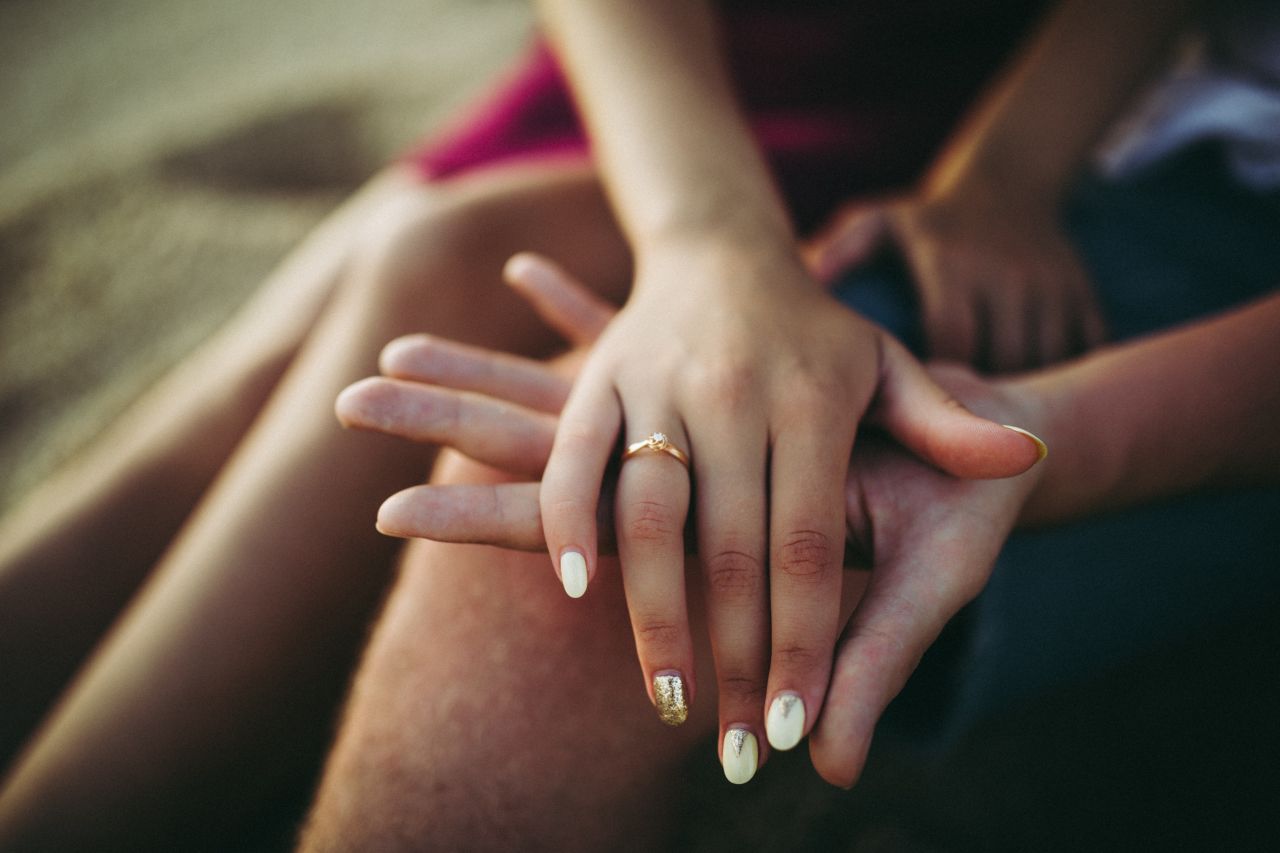
If your job requires you to use your hands, you may want to find a ring without any gemstones or intricate designs that could get loose or trap dirt. Platinum, being extremely hardy (the metal is just displaced when scratched and not worn away), is the best choice if you lead an extremely active lifestyle.
Experiment with New Approaches
Diamond eternity bands and rose gold braided rings are beautiful, but you should try on a variety of rings to find the one you like most. Talk to the jeweller about what you want and take their advise into account.
Choosing something out of the ordinary, like a wedding dress, might be a pleasant surprise. Try taking notes or sending a text while wearing it to gauge how comfortable it is.
Plan for the Future
You shouldn't be reluctant to experiment, but you should also make sure that the style you settle on is one you can live for the next 40 years. Adding diamonds or converting from white gold to platinum are just two examples of how you may make the ring uniquely yours to mark a special anniversary without worrying too much.
It Is Important To Think About The Maintainance
In order to clean a wedding band that has stones in it, you should soak it in warm, soapy water for a few minutes, brush it gently with a cotton swab or eyebrow brush (too much pressure could remove the diamonds from their setting), rinse it, and dry it with a soft, lint-free cloth.
Does that seem like too much of a hassle? If you don't wish to spend the time polishing your ring, go with gold or platinum. To restore its original lustre, simply rub it with a clean, lint-free cloth (chamois is ideal for this).
Get the Proper Measurement
Most people don't remove their engagement and wedding rings very often, even if their fingers swell and contract due to temperature changes, sweat, and pregnancy.
Make sure the final ring setting takes place when you can concentrate and your temperature is stable. That way, the jeweller can make sure the ring fits you perfectly through each stage of life.
Signing a contract first thing in the morning (when your fingers are swollen from sleep retention), right after exercise (when your fingers are swollen from the physical exertion), or when the temperature is extremely high or low is frowned upon.
To Ensure High Standards Are Met
All of your rings, not only your wedding bands, will be examined for quality. Make sure the ring includes both the manufacturer's logo and a quality stamp inside the band.
How Much Should You Spend On A Wedding Ring?
Although the price of a wedding ring might vary greatly depending on the band's metal, design, and embellishments, it is still helpful to have a general idea of how much most engaged couples spend. Using these figures, you may plan accordingly and allow a sufficient sum for wedding rings within your total wedding budget.
Depending on the metal, the price of a simple wedding band for a woman might range from $300 to $1,500. A band that is larger, more intricate, or encrusted with diamonds or other stones can cost anywhere from $1,000 to $6,000. A woman's wedding ring typically costs roughly $1,400.
The average cost of a wedding band for a man is $560, with the price ranging from as little as $100 for a simple titanium band to more than $2,000 for a platinum band.
Platinum rings will always be more expensive than other types of rings because of the higher cost of the metal itself. It is possible to find cheaper alternatives in white or yellow gold, with prices falling with increasing carat weight (lower carat golds are less expensive than higher carat golds). White gold, however, will need to be rhodium-plated every few years to prevent the metal from wearing down and turning yellow. Compared to white gold and platinum, palladium is a more budget-friendly and low-maintenance option.
Kinds Of Wedding Rings
Minimalist Wedding Ring
Plain bands with minimal or no embellishment are the norm for minimalist wedding rings. Minimalist rings with more flair might be set with a row of tiny diamonds, a rope pattern, a flat edge, or an intriguing textured surface. We recommend pairing minimalist wedding bands with engagement rings that make a bolder statement.
Diamond Wedding Ring
Diamond engagement rings and wedding bands can feature a single or numerous diamonds. The final appearance of the ring depends on the stone setting, which might be one of several varieties explained below. Diamond wedding bands are luxurious, whether they feature rows of small pavé diamonds or more giant stones set within channels or bars.
Eternity Wedding Ring
Diamond wedding rings are standard. However, eternity bands are different since the diamonds surround the entire band rather than just the front portion. Due to the large number of stones needed, eternity bands can be pretty pricey, but they are a stunning symbol of timeless elegance and commitment. Instead of an engagement ring and wedding band, these rings are perfect for the bride and groom who wish to make a bold fashion statement on their special day.
Enhancers Wedding Ring
The term "enhancer" refers to a set of two rings, one for the top of an engagement ring and one for the bottom, that are curved to fit around it. It is common for enhancers to have additional diamonds or other stones available in a wide range of metals and colours. Some future Mrs. opts to have their ring enhancers, and engagement ring soldered together to create one massive ring.
Matching Wedding Ring
We've established that "matching" wedding rings refer to bands that are the same or similar in design for both the groom and the bride. The style options for matching your partner's band are as vast and unbounded as your dedication to each other.
Engraved Wedding Ring
Your names, the date of your wedding, and a brief message can be engraved on the inside of the band of an engraved wedding ring to provide a special touch of customisation. Engraved wedding rings are becoming increasingly popular. If having an engraved wedding band is essential to both you and your partner, be sure that the style of ring you choose is one that can allow engraving in terms of breadth as well as the material it is made of.
FAQs About Wedding Ring
Types Of Wedding Band Stone Settings
Channel Setting
Gemstones are arranged in this mounting, so they are next to one another in a "channel" formed by a top and a bottom track of precious metal. Instead of sticking out from the surface of the ring, the gemstones are set flush with their circumference.
Pavé Setting
In French, pavé translates to "paved," The purpose of this set is to "pave" the ring with extremely small diamonds by putting them very tightly together. The stones are held in place by tiny beads or mini-prongs that are only discernible to the naked eye. The use of paves settings results in an astonishing amount of brilliance.
Micro-Pavé Setting
An identical idea as pavé, but with stones that are even more minute. Diamonds that are smaller than 0.1 – 0.2 carats, which is the size that is often used in pavé-set rings, are used in micro-pavé settings.
Bar Setting
This type of setting can most frequently be found in diamond wedding bands or other rings, with stones forming a continuous circle around a substantial piece of the ring. The rocks are separated from one another by metal bars in this setting.
Shared Prong Setting
The prongs holding diamonds or other stones set next to one another in this mounting are shared. Because they require less metal, rings with a continuous row of nearby stones are ideal candidates for shared prongs. This creates more space within the setting for additional stones.
Flush Setting
The stone in this setting is inserted into a hole in the band so that it is flush with the metal. This type of setting is also referred to as a "gypsy" setting. Depending on the metal and the design, a flush setting can have a highly contemporary or antique appearance; nonetheless, this setting is excellent for safeguarding the stone in either case.
Types Of Wedding Band Materials
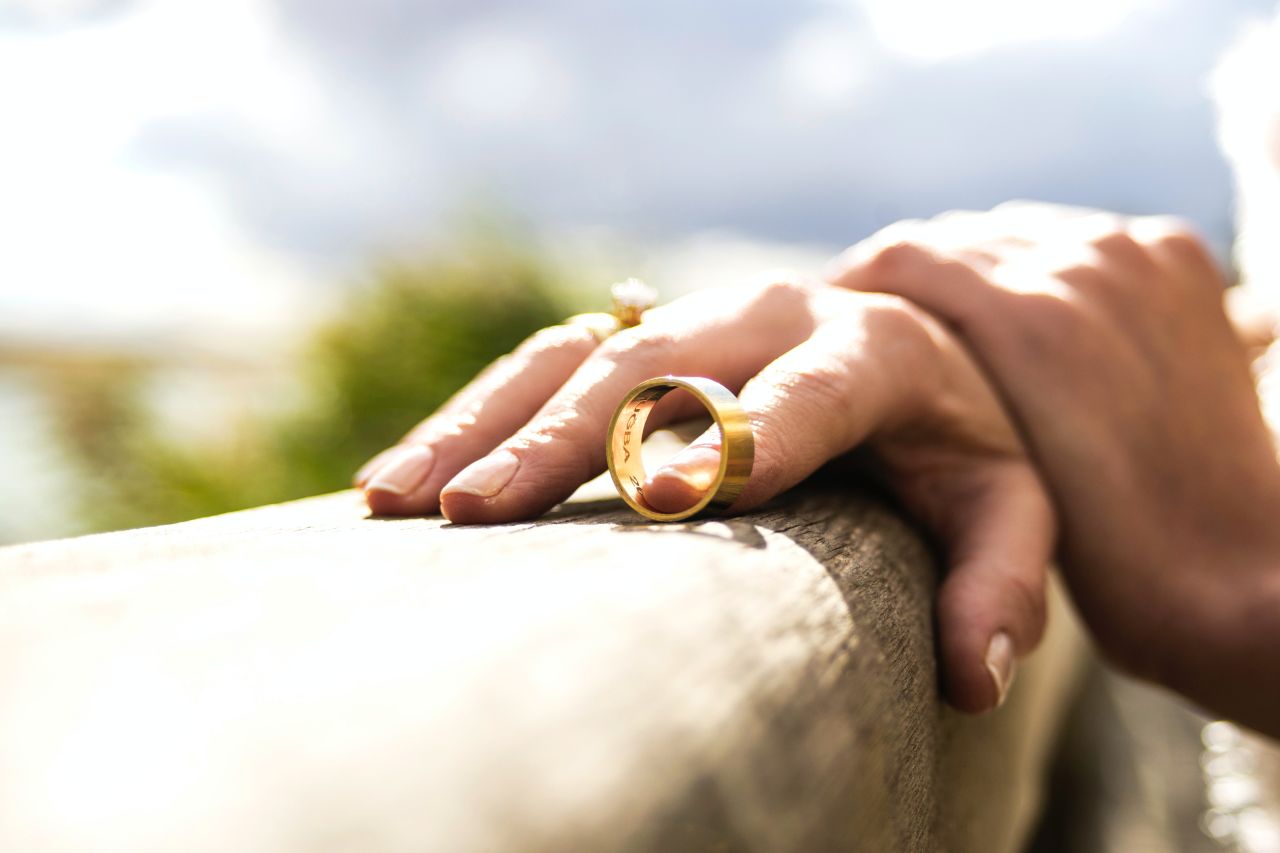
When purchasing wedding bands, one of the most important considerations you'll have to make is the metal you want your wedding ring to be made of. The type of metal will impact the ring's appearance, how it will wear over time, the level of care that will be necessary, and the cost of the ring. You can get a head start on your study on wedding ring metals by reading these informative descriptions.
The Precious Metals
Yellow Gold
The traditional wedding ring is made of warm-coloured metal known as yellow gold. Karat weight measures how much pure gold is present compared to other alloys, making higher-karat gold harder and more expensive. However, gold is the most malleable precious metal and requires the slightest effort to fix and polish.
White Gold
Yellow gold is alloyed with palladium and silver to create white gold, coated with rhodium for protection and a brilliant white appearance. Since rhodium plating wears off over time, you'll need to have your white gold ring re-plated periodically to maintain its gleaming appearance.
Platinum
Platinum is considered the most prestigious precious metal for wedding bands. It's the most valuable since it's the rarest, longest-lasting, and most durable option. Platinum is hypoallergenic and naturally white, and its dazzling colours will never fade.
Palladium
Palladium, a member of the platinum group, has a lustrous white finish that is scratch-resistant and resistant to fading. Because of its lower density than platinum (while still being a pure alloy), palladium is a robust and lightweight alternative to platinum that costs significantly less.
Silver
Silver, like yellow gold, has been fashioned into jewellery for a long time. Its softness and lack of durability allow it to be purchased at a lower cost than other precious metals. It is common practice to use rhodium-plate or combine pure silver with sterling silver to increase the metal's durability. Silver, like gold, will tarnish and scratch with time, so plan on doing regular upkeep.
Vermeil
Vermeil is a fantastic alternative if you desire gold's appearance but sterling silver's durability. Rings made of vermeil are constructed from sterling silver that has been heavily gold-plated (anywhere from 10k to 18k in weight). As long as you take good care of your vermeil, it will last for decades.
Alternative Metals
Titanium
Titanium is extremely strong, resilient, and lightweight, making it a popular choice for men's wedding rings. It is inherently hypoallergenic and appears a deeper grey than pure white. Titanium can endure numerous environmental factors, including chlorine and seawater, yet it is scratchable.
Cobalt Chrome
As an alloy of cobalt and chromium, cobalt chrome is a brilliant white metal often mistaken for platinum or white gold. Because it is more scratch-resistant than titanium and nearly as lightweight, it is a favourite among people who do manual labour with their hands for a living.
Tungsten Carbide
One of the most widely used non-traditional metals is tungsten carbide because of its low cost and high resistance to scratching. It's far heavier than any alternative metals and comes in a wide range of colours, from white to grey to black. While tungsten is exceptionally durable, rings made from the material can break if dropped or struck.
Zirconium
Zirconium, like titanium, is strong, lightweight, and hypoallergenic; it is also corrosion-resistant. Its natural colour is a greyish white, but when heated, a protective black covering emerges that is resistant to scratches. This unique black appearance (it can be polished or left matte) is known as black zirconium and has recently gained popularity.
Steel
Stainless steel is a fantastic material choice to gain the benefits of strength and durability without breaking the bank. Its sheen is more pronounced than titanium or zirconium, albeit it falls short of palladium or platinum. It is hypoallergenic like many other non-traditional metals.
Silicone
Silicone rings are becoming increasingly popular because they are resistant to scratches and dents, making them ideal for persons who lead busy lifestyles or engage in physically demanding occupations. Silicone wedding bands have advantages over traditional metal options, including lower cost, excellent durability, and comfort.
Wood
Wooden wedding rings are becoming increasingly popular due to their affordability, eco-friendliness, and one-of-a-kind aesthetic appeal, regardless of whether they feature metal inlays or are crafted entirely from wood. They are safe for people sensitive to metal and frequently exposed to high temperatures and electricity at work. Some couples exchange wooden rings because of the strength, protection, and rebirth symbolised by trees. However, teams should remember that wooden rings are far less durable than metal and should be removed before activities that could cause damage or scratching.
Diamond Set Wedding Rings.
After you've decided on a wedding band, it's time to think about whether or not to add a diamond or other expensive stone. More and more women are opting for wedding bands featuring diamond sets to complement their engagement rings.
Although diamonds aren't essential, no groom should ignore them. Men are increasingly opting for diamond wedding rings as a token of remembrance for loved ones they've lost. Using an imprint of your fingerprint is another enjoyable option.
Wedding rings often feature diamonds cut in the shape of a round brilliant or a square princess cut, but pear, emerald, and marquise shapes are also available. Your wedding ring will be more extravagant and perhaps more expensive if it features a diamond of an unusual shape.
Conclusion
It may seem overwhelming to decide between diamonds, gemstones, platinum, and gold for an engagement ring. Our ultimate ring buying guide will assist you in selecting a wedding ring that you will adore. Check out our guide to every key thing to consider before saying "I do" to the perfect wedding ring. An inexpensive platinum or 14-karat gold band can cost approximately $1,000, depending on where you shop. Diamonds or engraving can make your rings stand out from the crowd, but keep in mind that doing so will drive up the price dramatically.
If your job requires you to use your hands, opt for a ring without any gemstones or intricate designs that could get loose or trap dirt. Platinum, being extremely hardy (the metal is just displaced when scratched and not worn away), is the best choice if you lead an extremely active lifestyle. Try taking notes or sending a text while wearing it to gauge how comfortable it is.
Content Summary:
- Our ultimate ring buying guide will assist you in selecting a wedding ring that you will adore.
- You've gotten the engagement ring (after dropping a few clues, of course), so now it's time to choose the right wedding band to go with it—and we're here to assist.
- Check out our guide to every key thing to consider before saying "I do" to the perfect wedding ring.
- Though it may seem overwhelming to decide between diamonds, gemstones, platinum, and gold for an engagement ring, you shouldn't fret over it.
- Relax and take it easy on yourself.
- Kick off the trend: Is the ring you see plain or does it have embellishment?
- How about the engagement ring?
- Is it important that it be made of the same material as your engagement ring?
- Do you think it's important to have matching wedding bands for you and your partner?
- With the right responses to these questions, you may zero in on the specific results you're looking for.
- You can narrow down your options by researching which wedding bands complement the chosen engagement ring, but this strategy may backfire if you're hoping to keep the ring a surprise.
- A diamond pavé band, for example, could be the perfect finishing touch for a simple engagement ring, while a more ornate setting could benefit from a more striking band.
- Consider the interlocking nature of the rings.
- Look for a contour or shadow band made to interlock with the matching engagement ring if you intend to wear both rings continuously.
- A more elaborate design that works well with or without an engagement ring is a good choice if you want to wear your wedding band alone.
- Seek the advice of your jewellery in selecting an appropriate band for your ring.
- Once you've decided on a broad style for your ideal ring, you can start the fun part: trying them on!
- Two or three months before the wedding is a good minimum amount of time to shop for an engagement ring.
- You'll need this so that you may shop around, check prices, and return to the jewellery store several times to try on several rings.
- Keep in mind that additional services, such as engraving, can increase the overall delivery time by as much as a month.
- You needn't worry if your companion likes yellow gold and you prefer platinum.
- You aren't restricted to purchasing items of the same metal or style.
- Finding something you both enjoy is picking wedding bands that match your styles.
- Braided bands that blend the two metals are a good compromise.
- Estimate that the rings will cost roughly 3% of your overall wedding budget before you go shopping.
- An inexpensive platinum or 14-karat gold band can cost approximately $1,000, depending on where you shop.
- Putting diamonds or engraving can make your rings stand out from the crowd, but keep in mind that doing so will drive up the price dramatically.
- The cost of engraving, whether done by hand or machine, depends on a variety of factors, including the amount of words and the typeface selected.
- Think About Your Way of Life You need to make sure that the band is comfy if you plan on wearing it every day.
- One possible exception is if you play an instrument or engage in physical activity that necessitates you to remove your ring frequently, in which case a thinner band with rounded edges may be preferable.
- If your job requires you to use your hands, you may want to find a ring without any gemstones or intricate designs that could get loose or trap dirt.
- Platinum, being extremely hardy (the metal is just displaced when scratched and not worn away), is the best choice if you lead an extremely active lifestyle.
- Experiment with New Approaches Diamond eternity bands and rose gold braided rings are beautiful, but you should try on a variety of rings to find the one you like most.
- Talk to the jeweller about what you want and take their advise into account.
- Choosing something out of the ordinary, like a wedding dress, might be a pleasant surprise.
- Try taking notes or sending a text while wearing it to gauge how comfortable it is.
- Plan for the Future You shouldn't be reluctant to experiment, but you should also make sure that the style you settle on is one you can live for the next 40 years.
- Adding diamonds or converting from white gold to platinum are just two examples of how you may make the ring uniquely yours to mark a special anniversary without worrying too much.
- It Is Important To Think About The Maintainance In order to clean a wedding band that has stones in it, you should soak it in warm, soapy water for a few minutes, brush it gently with a cotton swab or eyebrow brush (too much pressure could remove the diamonds from their setting), rinse it, and dry it with a soft, lint-free cloth.
- Does that seem like too much of a hassle?
- If you don't wish to spend the time polishing your ring, go with gold or platinum.
- To restore its original lustre, simply rub it with a clean, lint-free cloth (chamois is ideal for this).
- Get the Proper Measurement Most people don't remove their engagement and wedding rings very often, even if their fingers swell and contract due to temperature changes, sweat, and pregnancy.
- Make sure the final ring setting takes place when you can concentrate and your temperature is stable.
- That way, the jeweller can make sure the ring fits you perfectly through each stage of life.
- Signing a contract first thing in the morning (when your fingers are swollen from sleep retention), right after exercise (when your fingers are swollen from the physical exertion), or when the temperature is extremely high or low is frowned upon.