Web Metrics and Site Analytics by WebSTAT

Planning a Beach Wedding in Melbourne: Brighton Beach & Bayside Guide

Home » Planning a Beach Wedding in Melbourne: Brighton Beach & Bayside Guide

Planning a Beach Wedding in Melbourne: Brighton Beach & Bayside Guide

Written by: Michael Lee | Consumer Research, Brighton Savoy

Planning a beach wedding in Melbourne can mean exchanging vows beside Port Phillip Bay, taking wedding photographs on the sand and celebrating only minutes from some of Melbourne’s best waterfront reception venues.

But a Melbourne beach wedding requires more planning than simply choosing a beautiful stretch of coastline.

You need to consider the beach or foreshore location, council requirements, Melbourne’s changing weather, wind, guest accessibility, parking, ceremony sound, photography, public access and what happens if conditions deteriorate.

Brighton Savoy brings an unusual perspective to this subject. Our family operated the former Brighton Savoy hotel, function centre and wedding venue directly opposite Brighton Beach for more than five decades before hotel and wedding venue operations ceased in 2021.

During those years, we saw firsthand both the attraction and practical realities of weddings beside Port Phillip Bay. Today, Brighton Savoy is an independent Australian information platform. You can read more about Brighton Savoy’s history and why we continue to write about weddings.

This guide uses that experience to help couples understand the practical decisions involved in planning a beach wedding in Melbourne, particularly around Brighton Beach and Melbourne’s Bayside coastline.

Quick Answer: How Do You Plan a Beach Wedding in Melbourne?

Start by choosing the beach and identifying the council or authority responsible for it. Check whether your ceremony requires a permit and what conditions apply to chairs, structures, amplified sound, photography and public access. Then plan for Melbourne’s weather and wind, guest accessibility, parking, toilets, ceremony sound and a genuine wet-weather alternative.

For couples considering Brighton Beach, also think about how the ceremony will connect with photography around the Brighton Bathing Boxes and where guests will go afterwards for the reception.

Most importantly, don’t plan a Melbourne beach wedding on the assumption that the weather will cooperate. Plan a wedding that you will still enjoy if it doesn’t.

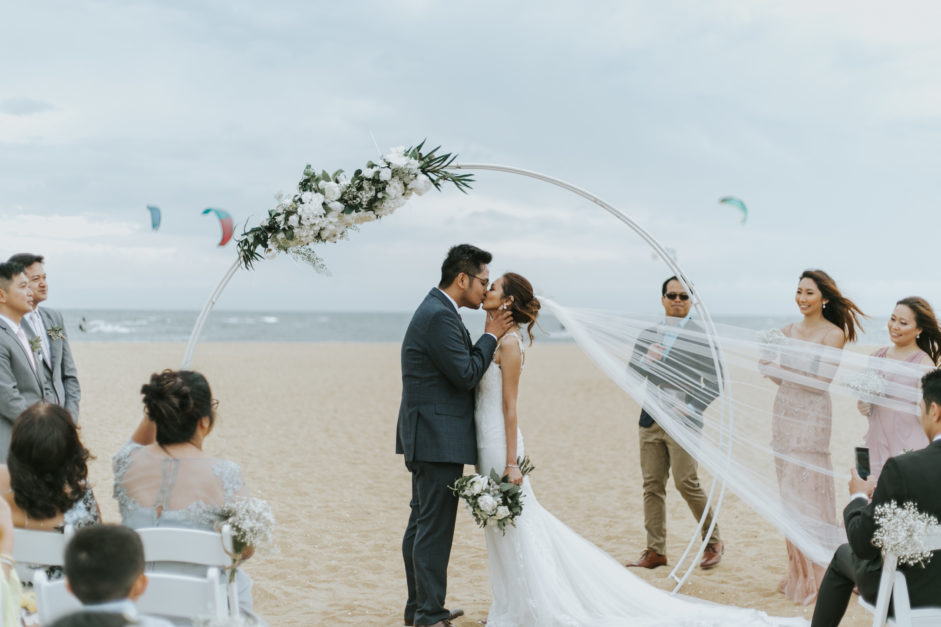
Elegant beach wedding ceremony at Brighton Beach overlooking Port Phillip Bay in Melbourne

Why Choose a Beach Wedding in Melbourne?

Melbourne’s coastline provides something very different from a ballroom, winery or country estate.

Port Phillip Bay offers broad water views, sandy beaches, foreshore gardens, jetties and sunsets while allowing couples to remain relatively close to Melbourne’s CBD, accommodation and wedding suppliers.

Depending on the location, a beach wedding can provide:

  • a naturally beautiful ceremony backdrop;
  • less need for elaborate ceremony decoration;
  • excellent coastal wedding photography;
  • a relaxed atmosphere;
  • easy access to waterfront reception venues;
  • opportunities for late-afternoon and sunset photographs; and
  • a distinctly Melbourne setting for interstate and overseas guests.

The trade-off is that you have less control over the environment than you would inside a conventional wedding venue.

Before committing to an outdoor ceremony, we recommend also reading our comprehensive guide to 20 things to consider before planning a beach wedding.

Where Can You Have a Beach Wedding in Melbourne?

Melbourne has a long coastline around Port Phillip Bay, and individual beaches can provide very different wedding experiences.

Locations couples may investigate include:

  • Brighton – iconic bathing boxes, broad bay views and excellent photography opportunities;
  • Elwood – beach, foreshore and parkland within easy reach of inner Melbourne;
  • St Kilda – one of Melbourne’s best-known waterfront precincts with extensive hospitality nearby;
  • Port Melbourne – an urban waterfront atmosphere relatively close to the CBD;
  • Sandringham – quieter Bayside character and attractive coastal scenery;
  • Black Rock – cliffs, foreshore and expansive bay views;
  • Beaumaris – a residential coastal environment with distinctive cliffs and beaches; and
  • the Mornington Peninsula – further from central Melbourne but offering numerous coastal ceremony and reception possibilities.

Do not choose a ceremony location solely from photographs.

Visit any beach you are seriously considering at approximately the same time and on the same day of the week as your proposed ceremony.

A location that appears almost deserted at 10am on a Tuesday may be extremely busy at 4pm on a warm Saturday afternoon.

Planning a Wedding at Brighton Beach

Brighton Beach has obvious appeal for couples wanting a recognisably Melbourne coastal wedding.

The colourful Brighton Bathing Boxes are among Melbourne’s best-known coastal landmarks, while the beach provides expansive views across Port Phillip Bay.

Brighton Savoy’s historical connection with the area is particularly strong. The former Brighton Savoy hotel stood directly opposite Brighton Beach, and weddings were an important part of the business for decades.

That experience taught us that the beach itself is only one part of the planning equation.

Couples considering Brighton should investigate:

  • the precise ceremony location;
  • current Bayside City Council requirements;
  • public access;
  • wind exposure;
  • guest access across sand;
  • parking;
  • toilets;
  • ceremony seating;
  • sound amplification;
  • photography around the bathing boxes;
  • the distance to the reception; and
  • the wet-weather alternative.

Important: Council requirements, permitted locations, conditions and fees can change. Before making non-refundable bookings, check the current requirements directly with Bayside City Council for the location and type of event you are planning.

1. Check the Council and Permit Requirements First

This should happen early in your planning, not a few weeks before the wedding.

Melbourne’s beaches cross different local government areas, so the rules that apply to one beach should not automatically be assumed to apply to another.

Depending on your location and event, you may need to investigate conditions relating to:

  • wedding ceremonies;
  • guest numbers;
  • chairs;
  • ceremony arches and other structures;
  • marquees;
  • amplified sound;
  • photography and videography;
  • alcohol;
  • commercial suppliers;
  • public liability insurance;
  • setup and pack-down times; and
  • environmental protection.

For example, City of Port Phillip currently publishes specific permit information for legal wedding ceremonies and celebrations held in its public open spaces. Couples considering locations around St Kilda, Elwood or Port Melbourne should check the current requirements directly with City of Port Phillip.

The key lesson: check the authority responsible for your exact ceremony location rather than relying on generic advice about Melbourne beach weddings.

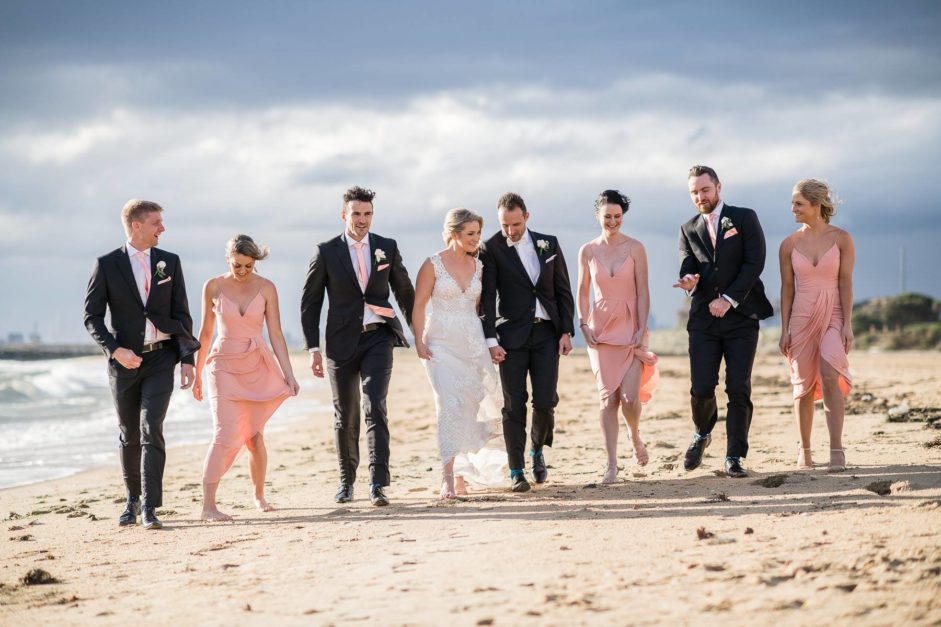
Professionally planned beach wedding ceremony setup on a Melbourne foreshore

2. Understand the Difference Between Permission and Privacy

A council permit does not necessarily turn a public beach into a private wedding venue.

Depending on the location and permit conditions, other people may continue using the surrounding beach and foreshore during your ceremony.

You may encounter:

  • swimmers;
  • walkers and runners;
  • families;
  • dogs where permitted;
  • cyclists on nearby paths;
  • other photographers;
  • tourists; and
  • people simply stopping to watch.

If complete privacy is essential to you, a ceremony directly on a public beach may not be your best option.

A private waterfront venue, coastal terrace or foreshore garden can provide a strong visual connection to Port Phillip Bay while offering greater control over guest access and ceremony logistics.

3. Plan Around Melbourne’s Weather

Melbourne’s coastal weather deserves serious attention.

Rain is only one consideration. Wind, heat, UV exposure, cooler conditions and falling temperatures later in the day can all affect an outdoor ceremony.

When planning your ceremony, consider:

  • the season;
  • ceremony time;
  • expected temperature;
  • wind exposure;
  • shade;
  • UV exposure;
  • how long guests will be outside; and
  • how quickly everyone can reach shelter.

A favourable long-range forecast is encouraging, but it is not a substitute for a wet-weather plan.

Our complete beach wedding planning checklist goes into greater detail about weather, wind, guest comfort, accessibility, sound, tides and wet-weather arrangements.

4. Have a Wet-Weather Alternative You Actually Like

One of the most important lessons from Brighton Savoy’s decades opposite Brighton Beach is that a wet-weather backup should never be treated as an afterthought.

Ask your reception venue or ceremony provider:

  • Is there an indoor ceremony space?
  • Is it large enough for every guest?
  • Will everyone be seated?
  • Is it genuinely protected from the weather?
  • When must we decide whether to move indoors?
  • Who makes the final weather call?
  • Can our flowers and ceremony styling be moved?
  • Will additional charges apply?
  • How will guests be notified?
  • How will suppliers be notified?

If you dislike the backup space, think carefully before committing to the outdoor ceremony.

You should be comfortable with both versions of your wedding.

5. Take Melbourne’s Coastal Wind Seriously

Wind is one of the most underestimated issues in beach wedding planning.

It can affect:

  • your ability to hear the ceremony;
  • veils and hairstyles;
  • flowers;
  • ceremony arches;
  • signage;
  • paper programs;
  • candles;
  • lightweight decorations; and
  • guest comfort.

Ask your florist and stylist how structures and arrangements will be secured. Something designed for an indoor ceremony cannot necessarily be placed on an exposed beach without modification.

It is often better to use fewer, more substantial styling elements and allow Port Phillip Bay itself to provide much of the backdrop.

6. Make Sure Everyone Can Hear the Ceremony

Waves, wind, surrounding activity and open space can make vows surprisingly difficult to hear.

For anything other than a very intimate ceremony, discuss amplification with your celebrant.

Useful equipment may include:

  • a wireless lapel microphone;
  • a handheld backup microphone;
  • a battery-powered speaker;
  • a separate source for ceremony music; and
  • backup batteries.

Check the applicable council or land-manager rules before using amplified sound.

7. Make Accessibility Part of the Location Decision

Before booking a ceremony on the sand, consider every person on your guest list.

Soft sand can be challenging for people using wheelchairs, walking frames or other mobility aids. It can also be difficult for older guests and anyone who cannot comfortably walk longer distances.

Walk the complete guest route yourself:

parking → ceremony → toilets → photography or waiting area → transport → reception.

Look for:

  • steps;
  • steep gradients;
  • soft sand;
  • uneven paths;
  • distance from parking;
  • accessible toilets;
  • appropriate seating; and
  • shade.

If appropriate and permitted, temporary beach-access matting may assist. Alternatively, a beachfront lawn, level foreshore area or waterfront terrace can provide much of the same coastal atmosphere without requiring every guest to cross deep sand.

Accessibility should form part of the original location decision rather than being addressed only after the venue or ceremony site has been chosen.

Accessible waterfront wedding ceremony on a Bayside Melbourne foreshore

8. Think About Parking and Guest Transport

Parking is particularly important at popular Melbourne beaches.

A location that works perfectly when two people arrive for an inspection can behave very differently when 80 wedding guests arrive within 20 minutes of one another.

Consider:

  • parking restrictions;
  • weekend demand;
  • summer beach traffic;
  • public transport;
  • rideshare drop-off locations;
  • transport for elderly or mobility-impaired guests;
  • where buses or shuttles can safely stop; and
  • the transfer between ceremony and reception.

Where possible, choose a reception close to the ceremony or provide organised transport.

Couples comparing reception options can use our guide to the best beach and waterside wedding reception venues in Melbourne.

9. Choose Your Ceremony Time With Photography in Mind

Bright sunlight reflecting from Port Phillip Bay can create very different photography conditions from a shaded garden or indoor ceremony.

The position of the sun can affect:

  • facial shadows;
  • squinting;
  • reflections from the water;
  • the appearance of the sky;
  • the direction you face during the ceremony; and
  • the timing of post-ceremony portraits.

Ask your photographer to discuss or inspect the location before finalising the ceremony time.

If photography is particularly important to you, our guide to the best wedding photo locations in Melbourne covers Brighton and numerous other locations around the city.

Wedding Photography at Brighton Beach

Brighton Beach is particularly attractive for wedding photography because couples can access several visually different environments within a relatively compact area.

Depending on conditions and access, photographs may incorporate:

  • Port Phillip Bay;
  • the sandy shoreline;
  • the Brighton Bathing Boxes;
  • foreshore vegetation;
  • coastal paths;
  • Melbourne’s skyline from selected viewpoints; and
  • late-afternoon or sunset light.

The bathing boxes are highly recognisable, but they are also popular with visitors.

Build sufficient time into your photography schedule rather than assuming you will have uninterrupted access to a particular box or section of beach.

A local photographer should also be able to suggest alternatives if crowds, wind, harsh light or weather make your original photography plan less suitable on the day.

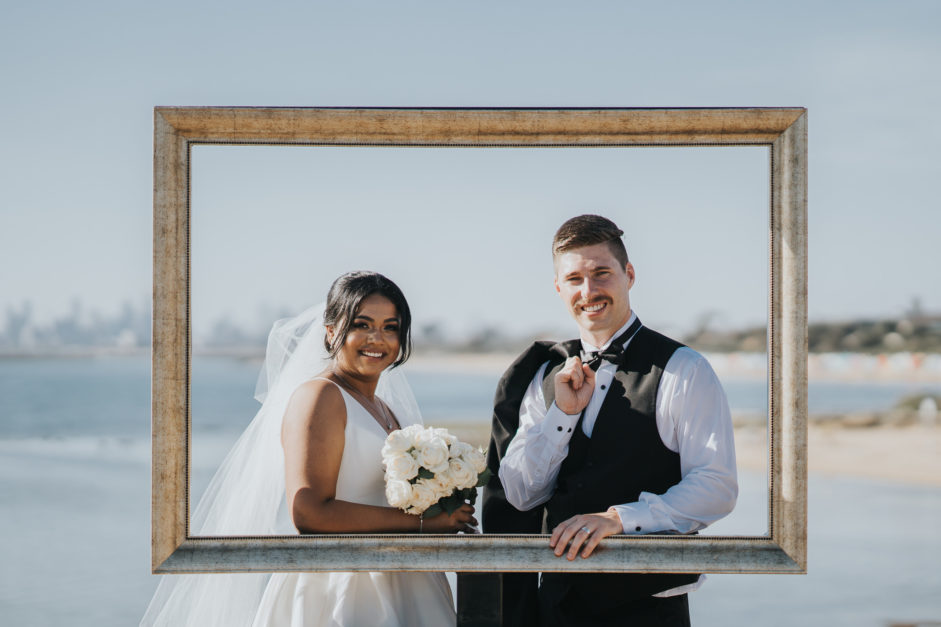
Newly married couple photographed near the Brighton Bathing Boxes in Melbourne

10. Tell Guests Exactly What to Expect

Do not simply put “Brighton Beach” or “St Kilda Beach” on the invitation and assume everyone knows how to prepare.

Your wedding website or guest information should explain:

  • whether the ceremony is actually on sand;
  • the expected dress code;
  • appropriate footwear;
  • where to park;
  • how far guests need to walk;
  • whether seating is provided;
  • whether there is shade;
  • what happens if it rains; and
  • how guests will get to the reception.

This is particularly important for interstate and overseas guests who may not be familiar with Melbourne’s coastal conditions.

For clothing advice, see our detailed guide to what to wear to a beach wedding and our separate guide to choosing shoes for a beach wedding.

11. Keep the Styling Appropriate for the Environment

A Melbourne beach wedding does not need to look like a tropical resort wedding.

Port Phillip Bay has its own visual identity: blue-grey water, open skies, sand, coastal vegetation and often softer, more restrained colours.

Consider styling that complements rather than competes with the environment.

This might include:

  • white and neutral flowers;
  • native-inspired greenery;
  • natural timber;
  • restrained ceremony structures;
  • weighted arrangements;
  • secure signage; and
  • simple seating.

Avoid lightweight objects that could blow away, and check the relevant authority’s rules before placing structures, decorations or materials on a beach or foreshore.

For additional styling inspiration, see our guide to choosing a beach wedding theme.

12. Choose the Reception With the Ceremony in Mind

The reception should be considered at the same time as the beach ceremony rather than as a completely separate decision.

Ask yourself:

  • How far will guests travel after the ceremony?
  • Will they need their cars?
  • Can elderly and mobility-impaired guests manage the transfer?
  • Where will guests go between the ceremony and reception?
  • Does the reception venue offer an appropriate wet-weather ceremony alternative?
  • Is accommodation available nearby?
  • How will the wedding party travel?

A waterfront reception can maintain the coastal atmosphere without requiring guests to remain outdoors for the entire celebration.

Brighton Savoy maintains an independently researched guide to Melbourne beach and waterfront wedding venues.

Couples wanting to compare coastal venues with wineries, estates, hotels, restaurants and other options can also explore our Top 100 Wedding Venues in Melbourne & Victoria.

Waterfront wedding reception overlooking Port Phillip Bay after a Melbourne beach ceremony

13. Consider Where Your Guests Will Stay

If a significant proportion of your guests are travelling from interstate or overseas, accommodation can affect the practicality of your wedding location.

Consider whether guests can stay:

  • close to the ceremony;
  • close to the reception;
  • near public transport;
  • within easy rideshare distance; or
  • in an area where they can enjoy Melbourne before or after the wedding.

A beachfront ceremony followed by a distant reception and accommodation in a third location can create unnecessary travel for guests.

For couples wanting to stay near the water, see our guide to beach and waterside accommodation in Melbourne.

14. Remember the Beach Environment

A wedding should leave the beach as you found it.

Talk to suppliers about how they will manage:

  • floral material;
  • cable ties;
  • packaging;
  • cups and bottles;
  • food waste;
  • signage;
  • decorations; and
  • setup and pack-down rubbish.

Be particularly cautious with lightweight items that can blow into Port Phillip Bay.

Do not assume that biodegradable, natural or floral material can automatically be scattered or left on a public beach. Check the rules applying to your ceremony location.

Our guide to beach wedding etiquette considers some additional issues couples and guests should think about when celebrating in a public coastal environment.

What Does a Melbourne Beach Wedding Cost?

The beach itself may appear inexpensive compared with hiring a traditional ceremony venue, but that does not mean a beach wedding is automatically cheap.

Potential costs can include:

  • council or land-manager fees;
  • public liability insurance;
  • celebrant;
  • chair hire;
  • ceremony styling;
  • flowers;
  • sound equipment;
  • transport;
  • accessible matting or pathways;
  • photography and videography;
  • wet-weather arrangements; and
  • the reception itself.

Compare the complete cost rather than simply comparing the apparent cost of using the ceremony location.

Our updated Australian wedding cost guide provides broader budgeting information for couples planning their celebration.

Small Beach Weddings in Melbourne

A smaller guest list can work particularly well for a beach ceremony.

Fewer guests may simplify:

  • seating;
  • transport;
  • accessibility;
  • sound;
  • movement between ceremony and reception;
  • photography; and
  • finding an appropriate indoor wet-weather alternative.

However, a small wedding does not automatically remove council requirements or other practical considerations.

If you are considering an intimate ceremony or micro wedding, see our dedicated guide to planning a small beach wedding.

Melbourne Beach Wedding Planning Checklist

Before You Book What to Confirm
Location Exact ceremony area and responsible authority
Permit Requirements, fees, conditions and application timing
Privacy Whether members of the public can continue using the area
Weather Rain, heat, wind, UV and temperature
Plan B Confirmed indoor or properly sheltered alternative
Accessibility Route from parking to ceremony, toilets and reception
Seating Number and type of chairs permitted
Sound Microphones, speakers and amplification restrictions
Facilities Toilets, shade and drinking water
Parking Availability and restrictions at ceremony time
Photography Light, crowds, access and travel time
Reception Distance and guest transfer arrangements

Beach Wedding vs Waterfront Venue Ceremony

Consideration On the Beach Waterfront Venue or Terrace
Direct beach experience Excellent Varies
Weather protection Limited Usually better
Accessibility Can be difficult Usually easier
Privacy Often limited Usually greater
Sound control More difficult Usually easier
Toilets May be distant Usually onsite
Parking Depends on location Depends on venue
Wet-weather backup Must be separately planned May be available onsite
Ocean backdrop Immediate Potentially excellent

For some couples, the best compromise is not getting married directly on the sand.

A lawn, terrace or venue overlooking Port Phillip Bay can retain the coastal atmosphere while making accessibility, seating, sound, toilets and weather management considerably easier.

10 Questions to Ask Before Booking a Melbourne Beach Wedding

  1. Who manages this beach or foreshore and do we need a permit?
  2. Does approval provide any exclusive use of the ceremony area?
  3. How many chairs and what types of structures are permitted?
  4. Can we use amplified sound?
  5. Where are the closest accessible toilets?
  6. How will elderly or mobility-impaired guests reach the ceremony?
  7. What is parking like at the same time and day of the week?
  8. Where will the ceremony move if conditions deteriorate?
  9. How will guests get from the beach to the reception?
  10. Who makes the final weather decision and when?

If you are planning the entire celebration rather than just the ceremony, our Complete Australian Wedding Planning Guide covers venues, budgets, suppliers, contracts, photography, entertainment, catering, timelines and many of the other decisions couples need to make.

Frequently Asked Questions About Melbourne Beach Weddings

Can you legally get married on a Melbourne beach?

Yes, wedding ceremonies can be held at suitable Melbourne beach and foreshore locations, subject to Australia’s marriage laws and any requirements imposed by the council or land manager responsible for the location. Check the current rules applying to your exact ceremony site before making non-refundable bookings.

Do you need a permit for a beach wedding in Melbourne?

Permit requirements depend on the beach, municipality, guest numbers and type of event. Do not assume that rules applying in one Melbourne municipality apply everywhere around Port Phillip Bay. Check directly with the council or authority responsible for your chosen location.

Can you get married at Brighton Beach?

Brighton Beach has long been associated with wedding ceremonies and wedding photography. Couples considering a ceremony there should confirm current permitted areas, conditions, application requirements and any fees directly with Bayside City Council before making arrangements.

Is Brighton Beach good for wedding photography?

Brighton Beach offers Port Phillip Bay, sandy shoreline and the colourful Brighton Bathing Boxes, making it one of Melbourne’s most recognisable coastal photography settings. Its popularity also means couples should allow for other visitors rather than expecting exclusive access.

What happens if it rains at a Melbourne beach wedding?

Your wet-weather alternative should already be confirmed before the wedding day. Ideally, choose an indoor or fully sheltered space capable of accommodating all guests and that you would be genuinely happy to use for the ceremony.

What is the best time for a Melbourne beach wedding?

There is no universal best time. Consider the season, temperature, wind, UV, beach crowds, parking, sun position and photography. Late afternoon can offer softer light, but the ideal time depends on the beach, date and orientation of the ceremony.

Can you have chairs and an arch on a Melbourne beach?

Possibly, but structures and furniture may be regulated by the relevant council or land manager. Confirm what is permitted before hiring chairs, arches, marquees or other equipment.

Can you play music at a beach wedding?

Depending on the location and permit conditions, amplified sound may be regulated. Where amplification is permitted, battery-powered equipment is often the most practical solution because electricity may not be available at the ceremony site.

What should guests wear to a Melbourne beach wedding?

Guests should follow the couple’s dress code while preparing for sand, wind and changing temperatures. Beach does not necessarily mean casual. Formal and semi-formal coastal weddings can work beautifully, but appropriate footwear and layers can make guests considerably more comfortable.

For more detailed advice, read our guide to what to wear to a beach wedding.

Is a beach wedding suitable for elderly guests?

It can be, provided accessibility is considered carefully. Check the distance from parking, sand conditions, seating, shade, toilets and access to the reception. A foreshore lawn or waterfront terrace may be preferable when mobility is a significant consideration.

Is a small beach wedding easier to organise?

A smaller guest list can make seating, transport, accessibility and reception transfers easier, but it does not necessarily remove permit or public-access requirements. See our small beach wedding planning guide for more detailed advice.

A Brighton Savoy Perspective

For more than five decades, Brighton Savoy operated directly opposite Brighton Beach. Thousands of wedding guests passed through the property during those years, and Brighton Beach and Port Phillip Bay were an important part of many couples’ wedding experience.

The former hotel, function centre and wedding venue ceased operating in 2021. Brighton Savoy now publishes independent wedding, hospitality, travel and consumer information rather than operating as a wedding venue.

That distinction is important, but so is the experience behind these guides.

Having spent decades beside Brighton Beach, our view is that couples should choose a beach ceremony because they genuinely love the setting, not because it appears easier than hiring a traditional ceremony venue.

A successful beach wedding is usually the result of more planning, not less.

When permits, weather, wind, accessibility, sound, guest comfort, photography and the wet-weather alternative have all been considered properly, Melbourne’s coastline can provide an extraordinary place to get married.

Continue Planning Your Melbourne Wedding

These Brighton Savoy guides cover the next stages of beach and Melbourne wedding planning:

Planning your entire wedding? Start with the location and guest experience, then build your ceremony, reception, photography, transport, supplier and wet-weather plans around the wedding you actually want rather than trying to reproduce someone else’s.

Posted in
Table of Contents
    brightonsavoy-logo

    Brighton Savoy is an independent Australian publishing and information platform covering weddings, hospitality, travel and consumer topics. Drawing on more than five decades of experience operating the former Brighton Savoy hotel and wedding venue in Melbourne, we combine first-hand industry knowledge with current research to create practical guides for Australian consumers.

    Are you ready to get married by the beach?

    Brighton Savoy is here to help make your wedding day perfect. Do yourself a favour and see what we can offer at our magnificent seaside venue by downloading our brochure.

    Scroll to Top